
Florida Homeowners Insurance Checklist: What to Review Before Storm Season
For Florida homeowners, storm season is a fact of life. Yet many homeowners don't discover gaps in their insurance coverage until after a hurricane, tropical storm, or flooding event causes damage.
Unfortunately, that's the worst possible time to learn what your policy does—or doesn't—cover.
Taking a few minutes each year to review your homeowners insurance policy can help you avoid costly surprises, protect your investment, and provide peace of mind when severe weather threatens.
The good news? A simple insurance review today could save you significant stress tomorrow.
Why an Annual Insurance Review Matters
Florida's weather, insurance market, and property values are constantly changing.
Home improvements, rising construction costs, and policy updates can all impact whether your current coverage still meets your needs.
Many homeowners assume they're fully protected, only to discover after a storm that certain damages, structures, or belongings aren't covered as expected.
A yearly review helps ensure your coverage keeps pace with your home and your lifestyle.
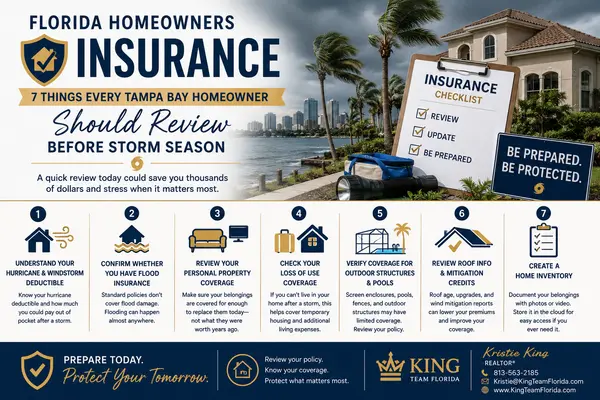
Review Your Hurricane and Windstorm Deductible
One of the most overlooked parts of a Florida homeowners insurance policy is the hurricane or windstorm deductible.
Unlike your standard deductible, hurricane deductibles are often calculated as a percentage of your home's insured value.
For example:
- A home insured for $500,000
- With a 2% hurricane deductible
- Could leave the homeowner responsible for $10,000 before insurance coverage begins
Many homeowners are surprised when they learn how much they may need to pay out of pocket after a major storm.
Take time to understand:
- Your hurricane deductible
- Your windstorm deductible
- When those deductibles apply
- How much you should keep in emergency savings
Don't Assume You Have Flood Coverage
One of the most common misconceptions in Florida is that homeowners insurance covers flooding.
In most cases, it does not.
Flood insurance is a separate policy.
Even homes outside designated flood zones can experience flooding from:
- Heavy rainfall
- Storm surge
- Drainage issues
- Tropical storms
- Hurricanes
If you're considering flood insurance, don't wait until a storm is approaching.
Many FEMA flood insurance policies have a 30-day waiting period before coverage becomes effective.
Check Your Personal Property Coverage
If your belongings were damaged or destroyed, would your policy replace them at today's cost?
There are two common types of coverage:
Replacement Cost Coverage
Pays to replace damaged items with new items of similar quality.
Actual Cash Value Coverage
Pays based on the depreciated value of your belongings.
Replacement cost coverage generally provides stronger protection and can make a significant difference after a major loss.
Review your policy to understand which type of coverage you currently have.
Understand Your Loss of Use Coverage
If a hurricane or severe storm makes your home temporarily unlivable, where would you stay?
Loss of Use coverage (sometimes called Additional Living Expenses) can help cover costs such as:
- Hotel stays
- Temporary rentals
- Restaurant meals
- Laundry expenses
- Other necessary living costs
Many homeowners overlook this important benefit until they need it.
Review your policy limits to ensure they're sufficient for your family's needs.
Don't Forget About Outdoor Features
Florida homeowners often invest heavily in outdoor living spaces.
Features such as:
- Swimming pools
- Screen enclosures
- Lanais
- Outdoor kitchens
- Pergolas
- Fencing
may have limited coverage under your policy.
With repair and replacement costs continuing to rise, it's important to confirm that your policy adequately reflects the value of these features.
If you've recently added or upgraded outdoor amenities, notify your insurance provider.
Pro Tip: Create a Home Inventory Every Year
One of the easiest and most valuable things you can do is document your belongings.
Set aside 30 minutes each year to:
- Walk through your home with your phone
- Record video of each room
- Open closets and cabinets
- Document electronics, furniture, artwork, and valuables
- Save the video to cloud storage
This simple step can make the claims process significantly faster and less stressful if you ever experience a loss.
Having proof of ownership and condition can help support your claim and reduce disputes.
Questions to Ask Your Insurance Agent
During your annual review, consider asking:
- Am I properly insured for today's rebuilding costs?
- Do I have replacement cost coverage?
- Is my hurricane deductible appropriate?
- Should I consider flood insurance?
- Are my outdoor structures adequately covered?
- Are there discounts available for recent home improvements?
- Have I missed any wind mitigation credits?
A quick conversation could uncover savings opportunities while improving your protection.
Protecting Your Home Starts Before the Storm
Your home is likely your largest financial investment.
The best time to evaluate your insurance coverage is before a storm is on the radar—not after one has already made landfall.
By reviewing your policy annually, understanding your deductibles, documenting your belongings, and addressing coverage gaps, you'll be better prepared when severe weather arrives.
Need a Trusted Insurance Professional?
If you're unsure whether your current policy provides the protection you need, I can connect you with experienced local insurance professionals who can review your coverage and help you explore your options.
Kristie King | King Team Florida
Helping Tampa Bay homeowners protect their investment and make informed homeownership decisions.
📞 813-563-2185
Let's make sure your home—and your peace of mind—are ready for whatever storm season brings.
Categories
Recent Posts



GET MORE INFORMATION