
Florida Homeowners Insurance: 7 Things Every Tampa Bay Homeowner Should Review Before Storm Season
Living in Tampa Bay comes with many advantages—beautiful weather, waterfront living, and year-round outdoor activities. However, Florida homeowners also know that hurricane season brings unique risks that require preparation.
One of the biggest mistakes homeowners make is assuming their insurance policy covers everything they need.
Unfortunately, many homeowners don't discover coverage gaps until after a storm when it's too late to make changes.
Taking just 30 minutes to review your policy today could save you thousands of dollars and a significant amount of stress in the future.
1. Understand Your Hurricane and Windstorm Deductible
Many Florida homeowners are surprised to learn that their hurricane deductible is separate from their standard homeowners insurance deductible.
For example:
- Standard deductible: $2,500
- Hurricane deductible: 2% of dwelling coverage
If your home is insured for $500,000, a 2% hurricane deductible means you could be responsible for the first $10,000 of storm-related damage.
Review your policy carefully and make sure you understand exactly what your out-of-pocket responsibility would be after a hurricane.
2. Confirm Whether You Have Flood Insurance
One of the most common insurance misconceptions is:
"I'm not in a flood zone, so I don't need flood insurance."
The reality is that flooding can occur almost anywhere.
Standard homeowners insurance policies generally do not cover flood damage.
Many Tampa Bay homeowners choose to purchase separate flood insurance for added protection, especially those located near:
- Bays
- Rivers
- Lakes
- Retention ponds
- Coastal areas
Even homes outside high-risk flood zones can experience flooding during major storms.
3. Review Your Personal Property Coverage
Think about everything inside your home:
- Furniture
- Electronics
- Clothing
- Jewelry
- Appliances
- Home office equipment
Would your current policy provide enough coverage to replace those items if they were damaged?
Also verify whether your policy covers personal property at:
- Actual Cash Value (ACV)
- Replacement Cost Value (RCV)
Replacement cost coverage generally provides greater protection because it accounts for today's replacement costs rather than depreciation.
4. Check Your Loss of Use Coverage
If a hurricane damages your home and it becomes temporarily uninhabitable, where would you stay?
Loss of Use coverage may help pay for:
- Hotel expenses
- Temporary housing
- Meals
- Additional living expenses
Many homeowners never review this section of their policy until they need it.
Understanding this coverage before a storm can help you plan more effectively.
5. Verify Coverage for Screen Enclosures, Pools, and Outdoor Structures
Florida homeowners often invest heavily in outdoor living spaces.
Items that may have limited coverage include:
- Screen enclosures
- Pool cages
- Pools
- Outdoor kitchens
- Fences
- Detached structures
- Sheds
Repair and replacement costs have increased significantly in recent years, making it important to ensure your coverage reflects today's costs.
6. Review Roof Information and Mitigation Credits
Your roof plays a major role in both insurance costs and insurability.
Review:
- Roof age
- Roof type
- Wind mitigation inspection reports
- Available discounts
Many homeowners qualify for premium reductions through wind mitigation credits but never submit the necessary documentation.
If you've recently installed a new roof, make sure your insurance company has updated information.
7. Create a Home Inventory Before Storm Season
One of the easiest steps you can take is documenting your belongings.
Use your smartphone to:
- Walk through every room
- Open closets and cabinets
- Record electronics and valuables
- Save receipts when available
Store the video in a secure cloud location.
Having a current inventory can dramatically simplify the claims process after a loss.
Frequently Asked Questions
Does homeowners insurance cover flooding in Florida?
Typically, no. Standard homeowners insurance policies generally exclude flood damage. Flood insurance is usually purchased separately.
What is a hurricane deductible?
A hurricane deductible is the portion of a storm-related claim that the homeowner must pay before insurance coverage applies. It is often calculated as a percentage of the home's insured value.
How often should I review my insurance policy?
At minimum, homeowners should review their policy annually and after major home improvements, roof replacements, or significant life changes.
Do new roofs lower insurance premiums?
In many cases, yes. New roofs and favorable wind mitigation features may qualify homeowners for insurance discounts.
The Bottom Line
Storm preparation isn't just about stocking up on water and batteries.
One of the most important things Tampa Bay homeowners can do is review their insurance coverage before hurricane season arrives.
A quick policy review today could prevent costly surprises tomorrow.
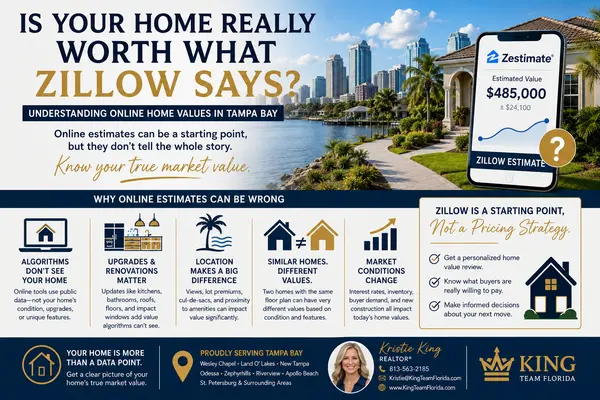
If you're unsure how your home's age, roof condition, location, or recent upgrades may impact its value and marketability, I'd be happy to provide a complimentary home value review and discuss what buyers are looking for in today's Tampa Bay market.
Kristie King, REALTOR®
King Team Florida | LPT Realty
813-563-2185
Kristie@KingTeamFlorida.com
Categories
Recent Posts






GET MORE INFORMATION