
Home Sales Are Down, But Does That Mean Home Prices Are Falling?
What Tampa Bay Buyers and Sellers Need to Know About Today's Housing Market
If you've been following real estate headlines lately, you've probably noticed a recurring theme: home sales are slowing down.
According to the latest figures reported by the National Association of REALTORS® (NAR), existing-home sales declined nearly 9% year over year in October 2026, reaching a seasonally adjusted annual pace of approximately 3.75 million homes.
At first glance, those numbers might make you think home prices are headed for a significant decline.
But here's what many buyers and sellers don't realize:
Fewer homes selling doesn't necessarily mean homes are losing value.
And understanding that distinction is especially important when navigating the Tampa Bay real estate market.
Slower Home Sales Don't Always Equal Lower Home Prices
There's a big difference between the number of homes selling and the prices those homes are actually selling for.
When sales activity declines, it tells us fewer transactions are taking place. It doesn't automatically tell us that property values are falling.
Home prices are influenced by several factors, including inventory, location, property condition, buyer demand, and affordability.
While the national housing market has experienced slower sales activity, home prices have remained relatively resilient in many areas.
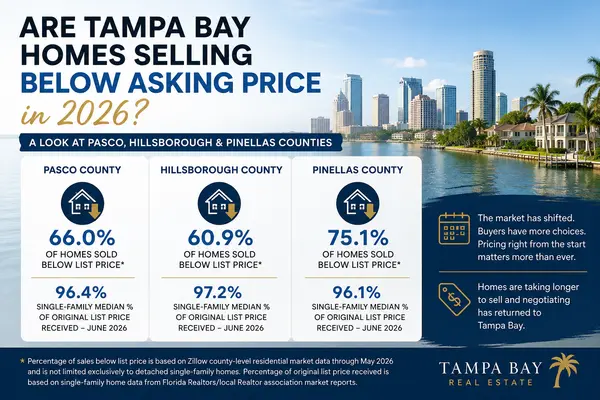
Here in Tampa Bay, we're seeing a market where buyers have more choices, homes are often taking longer to sell, and sellers are having to be more strategic with their pricing.
But that doesn't mean every home is declining in value.
Price Reductions vs. Declining Home Values: There's a Difference
One of the biggest misconceptions I hear is that when sellers reduce their asking prices, it means home values are dropping.
That's not necessarily the case.
Consider a homeowner who lists a property for $650,000, hoping to capitalize on the prices we saw during the height of the pandemic-era housing market.
After several weeks without an offer, the seller reduces the asking price to $615,000.
Did the home suddenly lose $35,000 in value?
Not necessarily.
The original asking price may simply have been higher than what today's buyers were willing to pay.
A price reduction is often a correction in a seller's expectations, not necessarily a decline in the property's underlying market value.
Of course, actual property values can decline, too. That's why it's important to look beyond asking prices and examine recent comparable sales, market trends, and neighborhood-specific activity.
What Does a Slower Market Mean for Tampa Bay Homebuyers?
If you've been waiting for the right opportunity to purchase a home in Hillsborough, Pasco, or Pinellas County, today's market may offer some advantages that were difficult to find just a few years ago.
During the height of the housing frenzy, buyers frequently faced multiple offers, waived contingencies, and had very little negotiating power.
Today's environment can look quite different.
1. More Opportunities to Negotiate
With fewer buyers competing for properties, sellers may be more willing to consider offers below their asking price.
Depending on the property and the seller's circumstances, buyers may also be able to negotiate closing cost assistance, repairs, or other concessions.
2. More Time to Make Decisions
Remember when buyers had to make an offer almost immediately after touring a home?
While desirable, well-priced properties can still sell quickly, many buyers now have more time to evaluate their options, compare homes, and make informed decisions.
3. Greater Flexibility With Inspections and Contingencies
A less competitive market can provide buyers with additional leverage when negotiating inspection periods, repairs, financing contingencies, and closing timelines.
These protections are important, especially when purchasing one of the largest investments you'll ever make.
4. Opportunities With New Construction
Throughout Tampa Bay, new construction communities are competing for buyers with incentives that may include mortgage rate buydowns, closing cost contributions, and price adjustments.
These incentives can make a meaningful difference in a buyer's overall cost of purchasing a home.
However, it's important to compare the complete financial picture, including HOA fees, CDD assessments, insurance, taxes, and long-term ownership costs.
Should You Wait for Mortgage Rates to Drop?
This is one of the most common questions I hear from buyers.
And it's a reasonable one.
Mortgage rates have a significant impact on affordability, particularly when purchasing a home in the $400,000 to $700,000 price range.
But there's another factor worth considering.
What happens if mortgage rates decline and more buyers return to the market?
Lower rates could improve affordability and encourage buyers who have been sitting on the sidelines to resume their home searches.
That additional competition could reduce some of the negotiating advantages buyers have today.
For example, a buyer who can negotiate a lower purchase price or seller-paid closing costs today may find those concessions harder to obtain in a more competitive market.
And if mortgage rates decline in the future, refinancing may become an option.
Of course, there's no guarantee that rates will fall, refinancing involves costs and qualification requirements, and buyers should never purchase a home based solely on the assumption that they'll be able to refinance later.
The better approach is to purchase a home when the numbers work for your current financial situation, while recognizing that future opportunities may provide additional flexibility.
What Does This Mean for Tampa Bay Home Sellers?
If you're considering selling your home, the slowdown in sales activity doesn't mean you can't achieve a successful sale.
It does mean that pricing, presentation, and marketing matter more than ever.
Buyers today are paying close attention to value.
They're comparing properties, considering the cost of improvements, evaluating insurance expenses, and weighing resale homes against new construction incentives.
Homes that are priced appropriately for their condition, location, and competition can still attract serious buyers.
But sellers who price their homes based on what a neighbor received two or three years ago may find themselves sitting on the market longer than anticipated.
In today's market, it's important to understand:
-
What comparable homes have actually sold for, not just their asking prices.
-
How long similar properties are taking to sell.
-
What competing homes are offering buyers.
-
Whether price adjustments are necessary to remain competitive.
-
How to position your property to stand out from the competition.
A successful sale requires understanding today's market, not yesterday's.
Real Estate Is Local, and Tampa Bay Is No Exception
National housing reports provide valuable insight into the broader market, but they don't tell the whole story about what's happening in your neighborhood.
The market for a single-family home in Wesley Chapel can look very different from the market for a waterfront property in St. Petersburg, a home in Land O' Lakes, or a condominium in Clearwater.
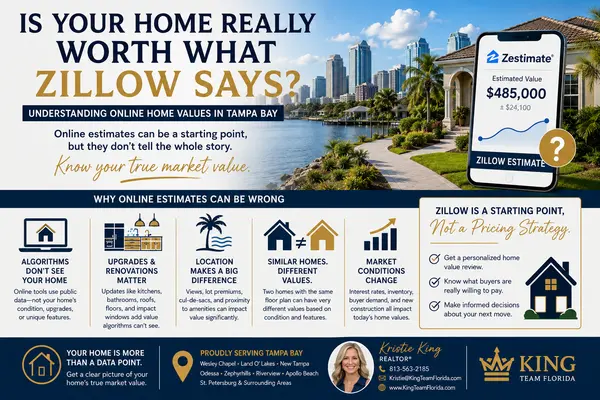
Even within the same community, factors such as floor plans, lot sizes, upgrades, insurance costs, and property condition can significantly influence buyer demand.
That's why I encourage buyers and sellers to look beyond national headlines and focus on the actual market conditions affecting the properties they're interested in.
The Bottom Line: Don't Confuse a Slower Market With a Crashing Market
Declining home sales are worth paying attention to, but they don't automatically signal a housing market crash or a dramatic drop in home values.
For buyers, a slower market can create opportunities to negotiate favorable terms and potentially secure a home with less competition.
For sellers, it reinforces the importance of realistic pricing, strong marketing, and understanding what today's buyers value.
And for everyone, it's a reminder that real estate decisions should be based on personal circumstances and local market data rather than headlines alone.
You don't need to perfectly time the housing market. You need to understand the market you're buying or selling in.
Let's Talk About Your Tampa Bay Real Estate Goals
Whether you're thinking about purchasing a home, considering selling, or simply wondering what your property is worth in today's market, I'm happy to help you understand your options.
I work with buyers and sellers throughout Hillsborough, Pasco, and Pinellas counties, providing local market insight and personalized guidance.
Kristie King, REALTOR®
King Team Florida | LPT Realty
📞 813-563-2185
National market figures referenced are based on the October 2026 existing-home sales information provided for this article. Local market conditions vary, and individual property values should be evaluated using current comparable sales.
Categories
Recent Posts






GET MORE INFORMATION